
I did not realize that these are part of most Unicode fonts.
This is how we used to create interfaces using only text. Adjust the line spacing a bit, and the lines would all connect.
┌────────────────────────────────────┐
│  A box of text.                    │
└────────────────────────────────────┘
This is how we used to create interfaces using only text. Adjust the line spacing a bit, and the lines would all connect.
 Jason Cook
 Lola
Lola FenTiger


@Raphael Lullis Goes to show that Tusky is mostly stuck on Mastodon 3. It doesn't support code blocks yet, even though Mastodon introduced displaying them correctly in October, 2022, with the release of Mastodon 4.0.
#FediMeta #FediverseMeta #CWFediMeta #CWFediverseMeta #Mastodon #Tusky
#FediMeta #FediverseMeta #CWFediMeta #CWFediverseMeta #Mastodon #Tusky
@Raphael Lullis It only displays correctly for fixed width fonts. For platforms that support code blocks, it switches to a fixed with font.
It is interesting looking at users on different platforms and how they deal with replies to their posts.
On one side, you have pre-X Twitter style micro-blogging platforms like Mastodon, which are primarily designed to broadcast your thoughts, and are not really designed for discussions. Many users of these platforms consider people who reply to their post as #replyguys and generally don't like people replying to their posts, especially if someone disagrees with them. And even if they want replies, the UI is not conductive of conversations since people have to actually mention them for them to see the reply. And, ironically, there is no way to prevent someone from replying to your post.
On the other side, you have platforms that are designed for conversations, like Facebook-style platforms and forums, and replies are not only expected, but encouraged. When you don't get replies is when you get worried. And the UI is designed specifically for having conversations, where you can see the entire conversation in a threaded view without someone mentioning you. And, interestingly enough, if you were the one who started the conversation, you can turn off comments (unlike Mastodon).
Completely different paradigms, and completely different user interfaces. What one group sees as a net negative, the other group sees as a net positive.
On one side, you have pre-X Twitter style micro-blogging platforms like Mastodon, which are primarily designed to broadcast your thoughts, and are not really designed for discussions. Many users of these platforms consider people who reply to their post as #replyguys and generally don't like people replying to their posts, especially if someone disagrees with them. And even if they want replies, the UI is not conductive of conversations since people have to actually mention them for them to see the reply. And, ironically, there is no way to prevent someone from replying to your post.
On the other side, you have platforms that are designed for conversations, like Facebook-style platforms and forums, and replies are not only expected, but encouraged. When you don't get replies is when you get worried. And the UI is designed specifically for having conversations, where you can see the entire conversation in a threaded view without someone mentioning you. And, interestingly enough, if you were the one who started the conversation, you can turn off comments (unlike Mastodon).
Completely different paradigms, and completely different user interfaces. What one group sees as a net negative, the other group sees as a net positive.
 Tom Andraszek
 Dr. Eric J. Fielding, PhD
 Hella
Hella Ema エマ
 Bill Statler
 lotfi
lotfi Harald Eilertsen
 Hamiller Hubzilla
 morph ⌂
 Lianna
 Mathias Hellquist


 Nicholas Conrad
 n8chz 🩎
 Phil Bass
(1/?)
All of this technical detail is true @jupiter_rowland, but beneath all of this is the point you made in your earlier comments. That there is a huge social gulf between the vanilla Mastodon user, who sees themselves as using a social network called Mastodon, and the fedizen who understands that Mastodon is the dominant software in the larger social network we call the fediverse.
@scott
All of this technical detail is true @jupiter_rowland, but beneath all of this is the point you made in your earlier comments. That there is a huge social gulf between the vanilla Mastodon user, who sees themselves as using a social network called Mastodon, and the fedizen who understands that Mastodon is the dominant software in the larger social network we call the fediverse.
@scott
@hosh This means that I keep discovering new platforms on my Friendica account that were previously completely unknown to me. That's very exciting.
@hosh
Hubzilla already has the database fields for it, but it is not fully implemented.
In the
In the
If we detected the name of other platforms, via webfinger or other means, there are existing database fields that can store this information. Then it would just be a matter of displaying it in the UI.
platform logo with post: that sounds like a nice feature to have.
Hubzilla already has the database fields for it, but it is not fully implemented.
In the
sites table, it records the name of project in the site_project field. But right now it is only recording Hubzilla and Streams sites names. So "Bunny of Doom" is one of the "projects" listed (which is a Streams instance where the project name was changed). But any other platform, this field is being left blank. In the
xchan table, where it lists all of the channels your server knows about, it has a field called xchan_network that tells you if they are using Zot6, ActivityPub, or Diaspora. You can see this displayed in the directory. If we detected the name of other platforms, via webfinger or other means, there are existing database fields that can store this information. Then it would just be a matter of displaying it in the UI.
 Der Pepe (nomád) ⁂ ⚝
@Mike Masnick ✅ (Mastodon) aka @Mike Masnick (Bluesky) wrote an interesting article called Some (Slightly Biased) Thoughts On The State Of Decentralized Social Media which stirred up some passionate discussions in this thread on Mastodon.
As someone who advocates for Hubzilla, which uses the Zot Protocol, it usually feels like we are a third party candidate in a popularity contest between ActivityPub and AT Protocol, or between Mastodon and Bluesky.
And I do have to chuckle when y'all mention "new and innovative features" that have existed in Hubzilla 5 to 10 years before you even started working on your variations. For example, nomadic identity has been in Zot Protocol before Bluesky even started. It might be older than Mastodon too, I am not sure. We even have federated single sign on using OpenWebAuth.
So, this has gotten me to thinking about why protocols become popular, and what is necessary to propagate ideas, philosophies, and systems. Compared to Hubzilla's long history, I am relatively new to Hubzilla and the social web, so I have the unique ability to compare what works and what doesn't between protocols, platforms, and their advocates.
A lot of interesting things to think about.
As someone who advocates for Hubzilla, which uses the Zot Protocol, it usually feels like we are a third party candidate in a popularity contest between ActivityPub and AT Protocol, or between Mastodon and Bluesky.
And I do have to chuckle when y'all mention "new and innovative features" that have existed in Hubzilla 5 to 10 years before you even started working on your variations. For example, nomadic identity has been in Zot Protocol before Bluesky even started. It might be older than Mastodon too, I am not sure. We even have federated single sign on using OpenWebAuth.
So, this has gotten me to thinking about why protocols become popular, and what is necessary to propagate ideas, philosophies, and systems. Compared to Hubzilla's long history, I am relatively new to Hubzilla and the social web, so I have the unique ability to compare what works and what doesn't between protocols, platforms, and their advocates.
A lot of interesting things to think about.
 Shimriez
 Der Pepe (Hubzilla) ⁂
@Scott M. Stolz
yes - Of cause HZ is all about centralized networking and something like WP is not.
And an other major difference is that for e.g. WP an ecosystem was build by many devs in the last decades and for HZ it was not.
This all makes a huge difference but if we look at some other basic basic concepts and architecture HZ is more closer to WP+BuddyPress than something to like Masto or FB.
HZ = WP+BuddyPress for decentralized networking
HZ = Joomla+CommunityBuilder for decentralized networking
The permission system, OpenWebAuth and nomadic identity are "just" consistent and logical features in this sense.
I look at Hubzilla as being closer to WordPress in the sense that you can post content in a variety of ways and you can extend it.
yes - Of cause HZ is all about centralized networking and something like WP is not.
And an other major difference is that for e.g. WP an ecosystem was build by many devs in the last decades and for HZ it was not.
This all makes a huge difference but if we look at some other basic basic concepts and architecture HZ is more closer to WP+BuddyPress than something to like Masto or FB.
HZ = WP+BuddyPress for decentralized networking
HZ = Joomla+CommunityBuilder for decentralized networking
The permission system, OpenWebAuth and nomadic identity are "just" consistent and logical features in this sense.
Recently, there has been several incidents of toxic behavior from Mastodon users (threats, harassment, doxing, or worse) directed at developers and outsiders, and many have pointed out that, to outsiders, Mastodon can feel unwelcoming (and even toxic). Some go so far as to say that Mastodon's culture is toxic.
This is contrary to many people's claims that Mastodon is nicer and better than other platforms and is a safe space from abuse. Many people have countered that claim by saying that you are only safe from abuse if you are from certain tribes or classes of people, and that if you are on the "good list" they will protect you, and if you are on the "bad list," they will ban you or even attack you. And some ethnic minorities actually feel unwelcome on Mastodon because of this.
I try to avoid placing labels on a broad group composed of millions of people, because not everyone fits the stereotype, and innocent people get mislabeled in the process. But, at the same time, I have to acknowledge that there are toxic people on Mastodon that ruin the experience.
I think, like many things, that the loudest are not necessarily the majority. And when you have a case of loud bullies demanding that everyone do it their way, the safest thing to do is to just keep your head down, hoping that they don't notice you. So people who disagree with their behavior don't say anything since they don't want to be the next target of abuse.
There is a sad statistic that people who have been abused are more likely to become abusers themselves. Not all of them, obviously, but people who grow up in abusive environments unfortunately pick up the same traits and tactics as the abusers, often not realizing that they, themselves, are using abusive tactics. They often use the justification that if they do it to their enemy, it is not abuse. What they don't realize is that the people who abused them thought the same way. They are literally copying their abuser's behavior except they switched who the target is.
The people who end the cycle of abuse are the ones who made a conscious decision to not be that way. They decide to take the high road instead of the low road. They decide to be kind and loving, instead of mean and hateful. They decide to follow principles instead of protecting someone or attacking someone based on which tribe they belong to.
How this relates to the Fediverse and Mastodon is that many people came here to escape the abuse. So when the outsiders come in, they become afraid, since they fear being abused again. A natural reaction, especially when the abuse was traumatic for them.
But, unfortunately some of those people are examples of the abused becoming abusers, and they lash out in unhealthy, counterproductive, and toxic ways, perhaps because they never learned how to deal with situations like this in a healthy way.
There are things we can do to protect people from abuse, and many of us are committed to stopping abuse. But to do that, we have to stop looking at abuse from an "us versus them" viewpoint. If we really want to effectively address abuse online, we have to address the behavior, regardless of who is engaging in it, while at the same time being compassionate with people, since many of the abusers have been abused themselves.
We can build a safer fediverse for people. Part of that is creating better tools that allow people to better protect themselves from abusers. But part of that is changing how we deal with abuse itself. Just because someone was abused, that does not mean they get a free pass to engage in abuse themselves. That just leads to more attacks and counterattacks, which is the opposite of what we want.
So, is Mastodon's culture toxic? I don't know. But I do know that we have to deal with toxic behavior, regardless of where it comes from.
This is contrary to many people's claims that Mastodon is nicer and better than other platforms and is a safe space from abuse. Many people have countered that claim by saying that you are only safe from abuse if you are from certain tribes or classes of people, and that if you are on the "good list" they will protect you, and if you are on the "bad list," they will ban you or even attack you. And some ethnic minorities actually feel unwelcome on Mastodon because of this.
I try to avoid placing labels on a broad group composed of millions of people, because not everyone fits the stereotype, and innocent people get mislabeled in the process. But, at the same time, I have to acknowledge that there are toxic people on Mastodon that ruin the experience.
I think, like many things, that the loudest are not necessarily the majority. And when you have a case of loud bullies demanding that everyone do it their way, the safest thing to do is to just keep your head down, hoping that they don't notice you. So people who disagree with their behavior don't say anything since they don't want to be the next target of abuse.
There is a sad statistic that people who have been abused are more likely to become abusers themselves. Not all of them, obviously, but people who grow up in abusive environments unfortunately pick up the same traits and tactics as the abusers, often not realizing that they, themselves, are using abusive tactics. They often use the justification that if they do it to their enemy, it is not abuse. What they don't realize is that the people who abused them thought the same way. They are literally copying their abuser's behavior except they switched who the target is.
The people who end the cycle of abuse are the ones who made a conscious decision to not be that way. They decide to take the high road instead of the low road. They decide to be kind and loving, instead of mean and hateful. They decide to follow principles instead of protecting someone or attacking someone based on which tribe they belong to.
How this relates to the Fediverse and Mastodon is that many people came here to escape the abuse. So when the outsiders come in, they become afraid, since they fear being abused again. A natural reaction, especially when the abuse was traumatic for them.
But, unfortunately some of those people are examples of the abused becoming abusers, and they lash out in unhealthy, counterproductive, and toxic ways, perhaps because they never learned how to deal with situations like this in a healthy way.
There are things we can do to protect people from abuse, and many of us are committed to stopping abuse. But to do that, we have to stop looking at abuse from an "us versus them" viewpoint. If we really want to effectively address abuse online, we have to address the behavior, regardless of who is engaging in it, while at the same time being compassionate with people, since many of the abusers have been abused themselves.
We can build a safer fediverse for people. Part of that is creating better tools that allow people to better protect themselves from abusers. But part of that is changing how we deal with abuse itself. Just because someone was abused, that does not mean they get a free pass to engage in abuse themselves. That just leads to more attacks and counterattacks, which is the opposite of what we want.
So, is Mastodon's culture toxic? I don't know. But I do know that we have to deal with toxic behavior, regardless of where it comes from.
 Haakon Meland Eriksen (Parlementum)
 Witcraft (Hubzilla)
 Hubzilla Monster
 Tejan Ausland
 Alimentazione e quello che sta intorno

that's fine with me, we all can do whatever we want, even if it doesn't appear particularly clever to others. it is clever to listen to advise though, consider it, and then make an informed decision.
People have the freedom to chose and people are going to make different decisions based on the information they currently have.
There is this concept called "perfect information" which is when you have the information needed to make the most optimal decision. It does not mean you have all of the information; it just means you have the information that results in you making a decision with the best possible outcome.
People rarely have perfect information. As a result, many people choose poorly and then complain. That can be addressed by communicating with people and spreading better information, but it will always be an ongoing issue since no one can possibly know everything.
The bigger problem is the toxic behavior that some people engage in. It's like mold. Once it gets on something, it tries to spread onto everything else it touches.
There is this concept called "perfect information" which is when you have the information needed to make the most optimal decision. It does not mean you have all of the information; it just means you have the information that results in you making a decision with the best possible outcome.
People rarely have perfect information. As a result, many people choose poorly and then complain. That can be addressed by communicating with people and spreading better information, but it will always be an ongoing issue since no one can possibly know everything.
The bigger problem is the toxic behavior that some people engage in. It's like mold. Once it gets on something, it tries to spread onto everything else it touches.

we can try to help by making information available. probably not perfect, but getting close, ideally. some time ago you mentioned that documentation about zot / nomadic networks was on the way. that would certainly help.
regarding the toxic behaviour though, i'm afraid that's bigger than can be solved or even influenced by software and information about it. it's the same reason that politics everywhere slides into populism, falling off the right side of the table. people begin to understand that life can't go on as we know it, resources won't last, the climate past the tipping point. we either have to drastically change the way we live or deal with tremendous consequences. that makes people scared and they lash out.
regarding the toxic behaviour though, i'm afraid that's bigger than can be solved or even influenced by software and information about it. it's the same reason that politics everywhere slides into populism, falling off the right side of the table. people begin to understand that life can't go on as we know it, resources won't last, the climate past the tipping point. we either have to drastically change the way we live or deal with tremendous consequences. that makes people scared and they lash out.
I have been following and participating in discussions related to the ActivityPub / AT Protocol bridge (also known as the One-Sided Mastodon vs. Bluesky Grudge Match).
There are some interesting observations:
There are some interesting observations:
- Many people don't feel that their fediverse software has the tools they need to prevent harassment or spam.
- Many people feel they need to depend on moderators to protect them, and don't feel empowered or able to protect themselves.
- A lot of people didn't really understand what they signed up for, and become shocked and angry when they find out how federation and the fediverse-in-general actually works. Many people did not even realize that they are connected to other platforms and protocols already.
- Some people don't seem to understand what public means, and that if their post is public, anyone can see it, including people they don't want to see it. They don't seem to realize that privacy by obscurity is not true privacy.
- Some people are willing to stereotype millions of people as being bad just because they are on the wrong platform.
- Some people are willing to collectively punish (i.e. block) millions of people, because they don't like one person involved in the project.
- Some people are extremely hateful and will resort to insults and threats to try to get what they want.
- A large chunk of Mastodon (and other parts of the fediverse) will wall itself off from the rest of the fediverse, for a variety of reasons, some valid, some not-so-valid.
- Some people actually hope they wall themselves off, since there seems to be a lot of hostility towards "outsiders" coming from them.
- There is a huge demand for fediverse software that has better privacy, access control, and moderation tools.
- The existing fediverse software that has these advanced tools are not widely know.
- Bluesky users don't seem to care whether there is a bridge or not, and are amused at the reaction going on over on Mastodon.
 HistoPol (#HP) 🏴 🇺🇸 🏴
 CassandraZeroCovid
 Evan Prodromou
 Expert Plus 🍀
 Thomas Blechschmidt
 damon
damon Curmudgeon
 Yohan Yukiya Sese Cuneta 사요한🦣
 Boris Mann
 Chris Shultz


 Giac El Vecio
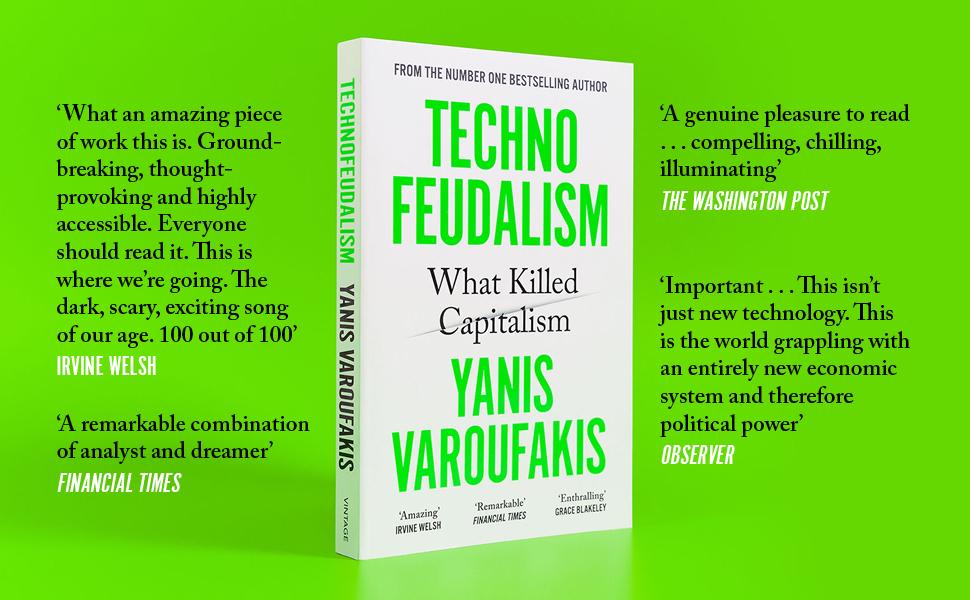
@kritikaPensulo @scott
#FightTechnofeudalism by #BigTech
(5/5)
...the rising new Phoenix, #AMD*, to this list. Even though these last 3 are hardware and cannot really charge a rent, as the software companies can by their subscriptions, etc.
If you are asking yourself what you can do to avoid entreching yourself in #serfdom, this is a key part of it:
https://mastodon.social/@HistoPol/110989338549425682
ETA #AMD:
https://mastodon.social/@HistoPol/111946174776816007
https://mastodon.social/@HistoPol/111946084990349571
//
#FightTechnofeudalism by #BigTech
(5/5)
...the rising new Phoenix, #AMD*, to this list. Even though these last 3 are hardware and cannot really charge a rent, as the software companies can by their subscriptions, etc.
If you are asking yourself what you can do to avoid entreching yourself in #serfdom, this is a key part of it:
https://mastodon.social/@HistoPol/110989338549425682
ETA #AMD:
https://mastodon.social/@HistoPol/111946174776816007
https://mastodon.social/@HistoPol/111946084990349571
//
The problem we have today is centralization of power and money. In a capitalist society, they consolidate power by creating huge mega-corporations, and by designing their school system to teach everyone how to be employees of corporations. In a communist society, they consolidate power by seizing all of the property and giving control to government bureaucrats & party leaders, and by designing their schools system to teach everyone how to be employees of state-owned enterprises.
Notice that neither of them are teaching you how to empower yourself and become financially independent. Why? Because they either want you to work for the big corporations, or they want you to work for state-owned enterprises, both of which are controlled by the people at the top. They know that they can easily control and manipulate you if you don't have financial freedom.
So, we have to be careful of how we react to this situation. We don't want the situation described in the song Won't Get Fooled Again by The Who. As the lyrics say: "Meet the new boss. Same as the old boss."
So commercial enterprises aren't necessarily bad. I'd rather see a person start their own business or side gig or cooperative than have to work for a giant corporation.
For example, an artist should be able to sell the art they make. A web developer should be able to sell web design services directly to customers without having to work for someone else. A group of people should be able to create a team and start a company that has a positive impact on society. People should be able to create a cooperative or association that engages in commercial activities.
So we need to be supportive of small businesses, cooperatives, employee-owned companies, public benefit corporations, associations, not-for-profits, and other smaller operations, because that is what creates wealth and gives people independence, and makes them more resistant to control and manipulation that is coming from the top.
They want to keep you poor to control you. They want you to reject wealth. That way you are poor and powerless and they can easily step on you.
So, I understand not wanting to support the mega-corporations, especially those who track you and treat people poorly. But just because someone wants to be compensated for their work, that is not a bad thing. After all, even employees expect to get paid for their work. Not all commercial activities are bad.
CC: @HistoPol @kritikaPensulo
Notice that neither of them are teaching you how to empower yourself and become financially independent. Why? Because they either want you to work for the big corporations, or they want you to work for state-owned enterprises, both of which are controlled by the people at the top. They know that they can easily control and manipulate you if you don't have financial freedom.
So, we have to be careful of how we react to this situation. We don't want the situation described in the song Won't Get Fooled Again by The Who. As the lyrics say: "Meet the new boss. Same as the old boss."
So commercial enterprises aren't necessarily bad. I'd rather see a person start their own business or side gig or cooperative than have to work for a giant corporation.
For example, an artist should be able to sell the art they make. A web developer should be able to sell web design services directly to customers without having to work for someone else. A group of people should be able to create a team and start a company that has a positive impact on society. People should be able to create a cooperative or association that engages in commercial activities.
So we need to be supportive of small businesses, cooperatives, employee-owned companies, public benefit corporations, associations, not-for-profits, and other smaller operations, because that is what creates wealth and gives people independence, and makes them more resistant to control and manipulation that is coming from the top.
They want to keep you poor to control you. They want you to reject wealth. That way you are poor and powerless and they can easily step on you.
So, I understand not wanting to support the mega-corporations, especially those who track you and treat people poorly. But just because someone wants to be compensated for their work, that is not a bad thing. After all, even employees expect to get paid for their work. Not all commercial activities are bad.
CC: @HistoPol @kritikaPensulo
@scott
I can agree with all your points.
If you listen to leading #economists like #RobertReich, you will come to realize that the current economic system perpetuates wealth concentration among a financial elite (#oligarchs, #plutocrats.)
In order to achieve these goals, a lot of things need to change, policy-wise and legally:
https://mastodon.social/@HistoPol/111892121431913587
I can agree with all your points.
If you listen to leading #economists like #RobertReich, you will come to realize that the current economic system perpetuates wealth concentration among a financial elite (#oligarchs, #plutocrats.)
In order to achieve these goals, a lot of things need to change, policy-wise and legally:
https://mastodon.social/@HistoPol/111892121431913587